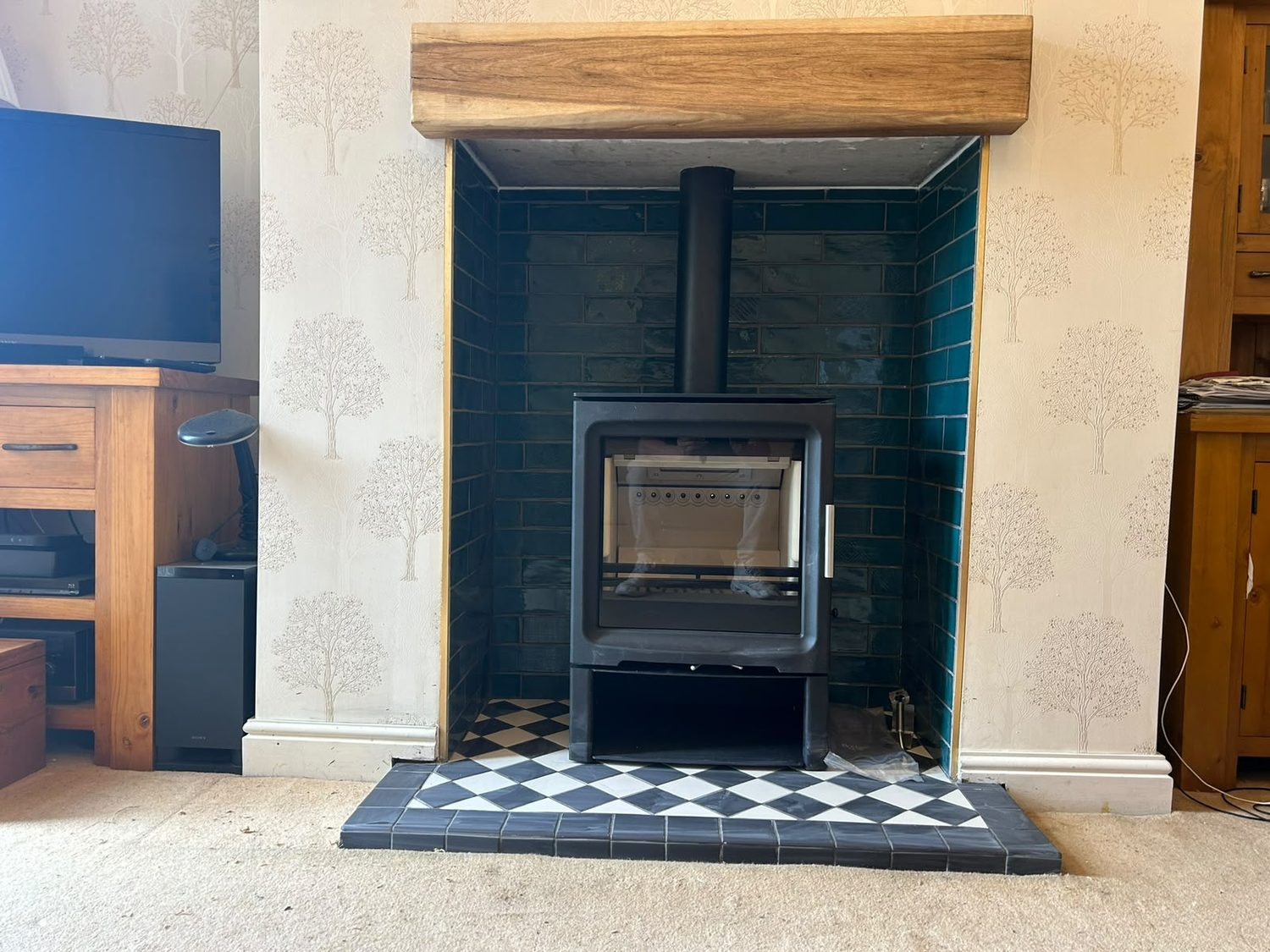
What stove and fireplace work do you do in Staining?
Across Staining (FY3) it is mostly modern estate twin wall installations and traditional cottage chamber work. Staining mixes older village property that still has its chimneys with newer estate housing built without one, so roughly half the jobs here are a liner into an existing stack and half are a twin wall system from scratch. Every job starts with a free survey of the actual chimney breast and the stack, because a price given over the phone for work like this is a guess.
Do you charge extra to come out to Staining?
No. Travel is included in the price. Staining is about 3 km from our Blackpool base, which is well inside the patch we cover as a matter of course, so you are paying for the stove and the work rather than for the van.
Have you fitted stoves in Staining before?
Yes. Staining is a mix of newer estate housing with no flue at all and older village property with original openings, so both jobs come up here. We are happy to talk through the kind of installs we have done near Chain Lane when you call, and to explain how we would approach yours.
Does the property in Staining change how the job is done?
It splits the work in two. Older property around Staining generally has a chimney, so it is a lining job. Newer estate housing there was built without one at all, which means a twin wall insulated flue system either up the gable or internally through the roof. The second is a bigger job and it is the only way to get a real fire into a house that was never designed for one, which is why we do a lot of it out this way.
How long would an installation in Staining take?
A clean install into a sound existing chimney is usually a single day on site in Staining. Opening a blocked breast, rebuilding the chamber, fitting a beam and hearth and making the plaster good runs to two or three days, and a twin wall system through the roof is normally two. You are told which of those yours is at the survey, along with the price, before anything is committed.
Can you come and look at a chimney in Staining before we buy a stove?
That is the order we would rather do it in. The survey tells you what the chimney can take, whether it needs a liner or a twin wall system, what size appliance the room actually wants and what the builder work will cost. Choosing a stove first and finding out afterwards is how people end up with something that is too big for the room or will not fit the opening.
Do we get a certificate for a stove fitted in Staining?
Yes. The installation is notified through the HETAS scheme, so you get a certificate of compliance with Part J of the Building Regulations without needing a separate building control inspection. Keep it with the house paperwork, because it is what a surveyor, a solicitor and your insurer will ask to see.