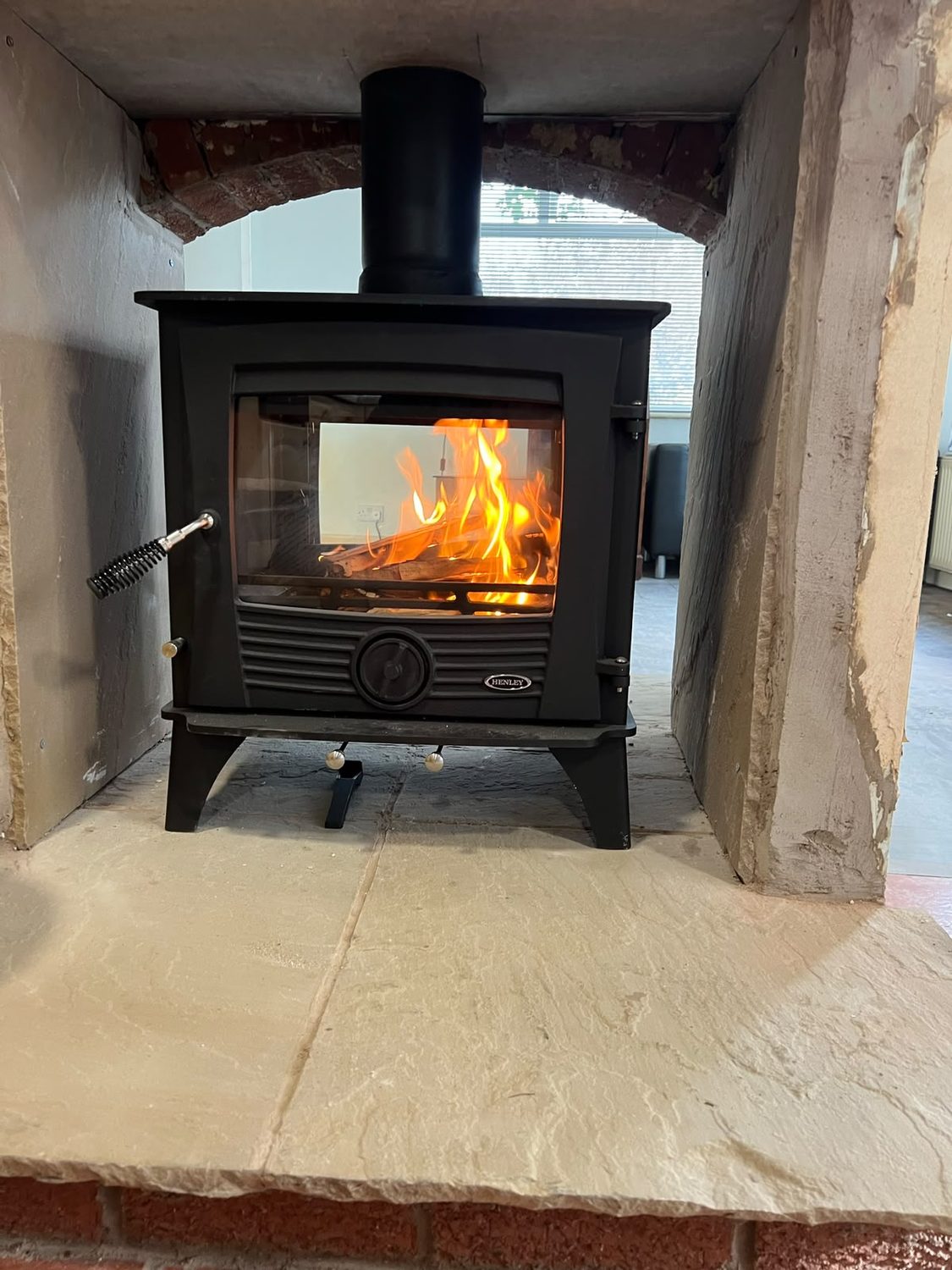
Our fireplace was blocked up years ago, can it be opened again?
Almost always. Under the plasterboard or the bricked up panel there is usually the original opening, often with the old lintel or arch still in place. We open it up carefully, see what is actually there, and then tell you what it needs: sometimes nothing more than cleaning out and lining, sometimes a new lintel and a rebuilt chamber. Either way you find out on day one rather than after committing to a stove.
How big does the opening need to be?
Bigger than the stove, and by a specific amount. Every appliance has minimum clearances to the sides and the back of the chamber and to any combustible material, published in its own instructions, and those set the minimum opening. Beyond that it is a look: a stove sitting in a chamber with generous space around it reads better than one wedged in. We work the numbers out from the model you choose before any brickwork is touched.
Do you need a lintel?
If the opening is being widened or the existing support is failing, yes. The breast above a fireplace is carried on a lintel or a brick arch, and if you take out brickwork you have to replace that support properly. Where the existing lintel is sound and the opening is not changing width, it stays. What we will not do is leave an opening relying on brickwork that is already cracked.
How much mess does opening a chimney breast make?
A lot of soot and rubble, which is why the preparation matters more than the work. Dust sheets go down over the floor and the route out, the surrounding furniture is covered or moved, and the debris is bagged as it comes out rather than piled up. It is not a clean job while it is happening and the room is hoovered and wiped down before we leave each day.
Can you make the opening a different shape?
Yes, within what the structure allows. Square openings, arched openings, taller openings for a floor standing stove and full breast openings with a stone or slate surround are all regular work. The constraint is the lintel span and what is above it, and we will tell you at survey which shapes are straightforward and which need extra structural work.
Will the plastering be made good afterwards?
Yes. Making good is part of the price, not an extra. The breast is patched and skimmed back to a finish ready for decorating, and where a whole breast has been reworked it gets a full skim rather than a patchwork of repairs. We leave the plaster to dry properly and tell you how long to wait before painting.