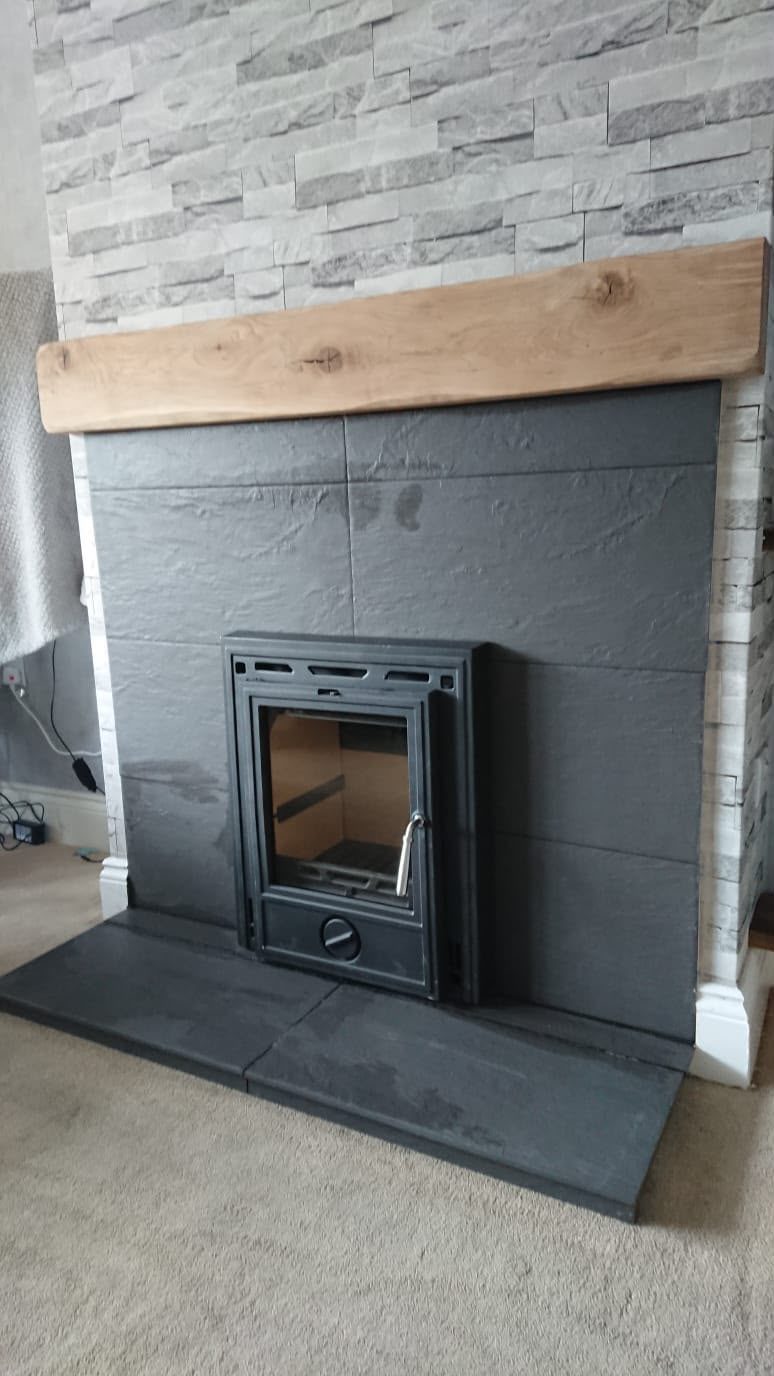
Inset or freestanding, which gives more heat?
A freestanding stove, generally. It has air moving over the top, both sides and the back, so it radiates and convects into the room from every face, and the visible flue pipe gives up heat too. An inset stove is surrounded by masonry, so more of its heat goes into the chamber, and good inset models compensate with a convection air path. If maximum output into the room is the priority, freestanding wins.
Can any stove be inset?
No. Inset appliances are designed and tested for it, with the correct convection routes and clearances for sitting in a chamber. You cannot simply push a freestanding stove back into an opening and call it inset, because the clearance to the sides and rear are part of what keeps the surrounding masonry and any combustibles at a safe temperature. We fit whichever type the room suits, and we will not fit the wrong one.
Which looks better in a period room?
Freestanding, most of the time. A cast iron stove standing on a slate hearth under an oak beam with the flue pipe on show is the look people picture when they think of a woodburner, and it sits naturally in a Victorian or Edwardian terrace. Inset units read as contemporary and tend to work best in a modern room or a full breast panel treatment.
Do inset stoves need a bigger opening?
A deeper one, usually. An inset appliance needs the chamber depth to take the body of the stove plus the clearances behind and to the sides, and on a shallow breast that can mean building the chamber out or cutting further back into the breast. We measure the existing opening against the chosen model at survey, because it is the single thing most likely to rule an inset out.
Can I change from freestanding to inset later?
It is possible but it is a full rebuild of the chamber, not a swap. The opening size, the depth, the hearth arrangement and often the flue connection are all different, so budget for it as a new installation rather than a change of appliance. It is worth thinking it through properly the first time, which is what the survey is for.
Do you fit double sided stoves?
Where the structure allows it, yes. A double sided stove sitting in an opening through a breast between two rooms is a striking thing and a more involved install: the opening has to be formed through the full thickness, both hearths have to comply, and the clearances apply on both faces. It is a survey job before it is a quote.