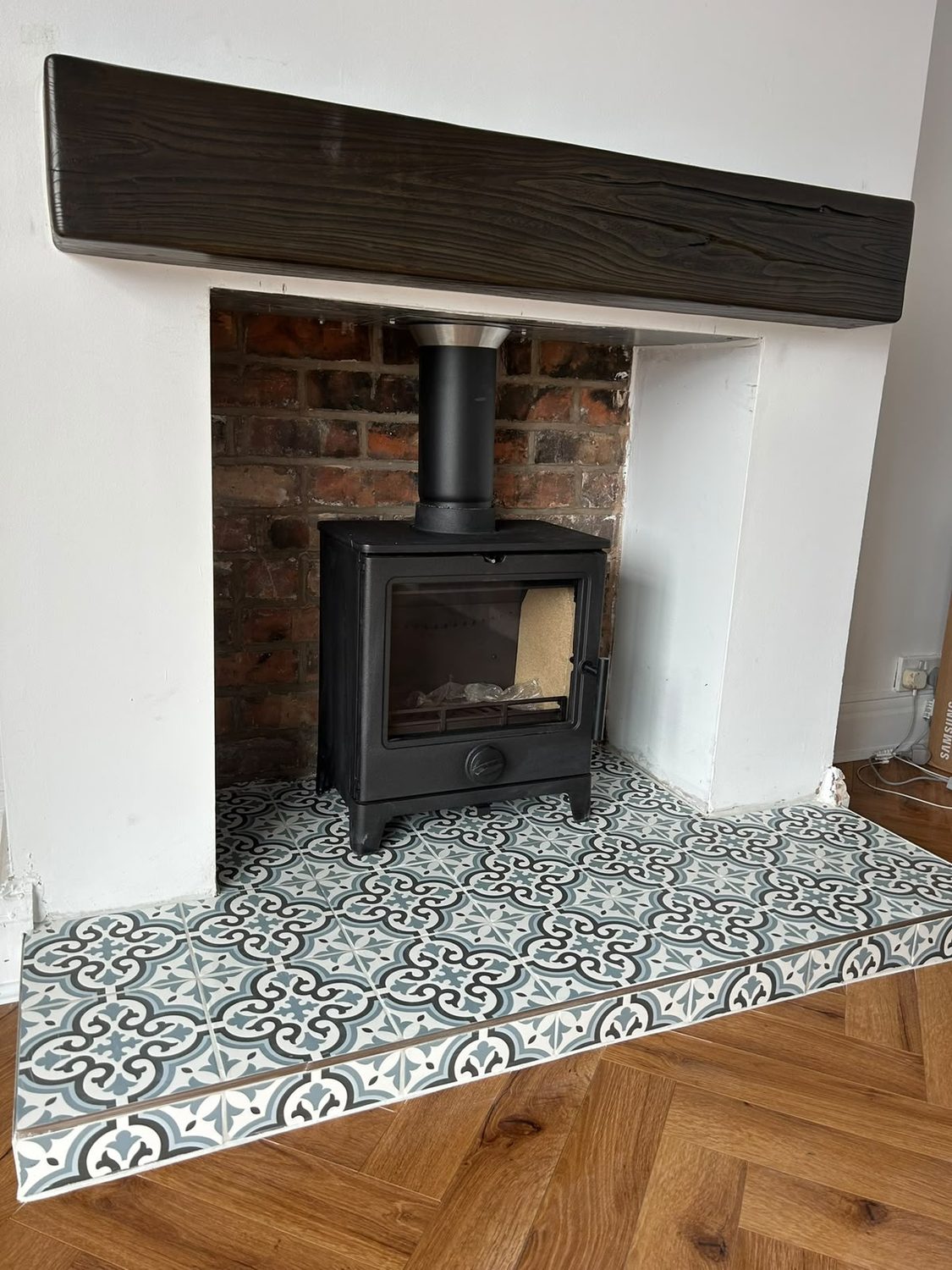
What is the difference between a woodburner and a multifuel stove?
A woodburner has a flat firebed, because wood burns best sitting on its own ash with the air coming in over the top. A multifuel stove has a raised grate with an ashpan under it, so air can come up through the fuel, which is what coal and smokeless need. Multifuel models will burn wood too, so they are the more flexible choice, and pure woodburners tend to be a little better at burning wood alone.
Which is cheaper to run, wood or smokeless fuel?
It depends what you pay for logs. If you have a source of properly seasoned, dry hardwood at a sensible price, wood usually wins. If you are buying kiln dried logs in nets from a garage forecourt, smokeless fuel is often cheaper per hour of heat and will hold a fire in overnight, which wood will not. Having the option of both is exactly why people choose multifuel.
Do I need a different flue liner for smokeless fuel?
A heavier grade, yes. Smokeless fuel burns hotter and produces more acidic condensates than wood, so we specify a 904 grade liner rather than a 316 where smokeless is going to be the main fuel. It costs a bit more up front and it is the difference between a liner lasting the length of its guarantee and one that does not.
Can I burn house coal?
Not if you are in a smoke control area, and we would steer you away from it anyway. Traditional house coal is dirty on the glass, hard on the liner and produces far more soot than approved smokeless fuels, which are made specifically to burn cleanly in an appliance like this. Any decent smokeless is a better fuel for the same money.
How often does a multifuel stove need sweeping?
Once a year as a minimum for wood, and twice a year if you burn a lot of smokeless fuel or run the stove hard through the winter. Sweeping is not just soot removal, it is the sweep looking at the liner, the register plate and the terminal, and it is usually a condition of the appliance guarantee and of your house insurance.
Will you take the old fire out first?
Yes. Removing a back boiler, a gas fire or an old open grate, capping or removing services safely and clearing away the debris is part of the job rather than something you arrange separately. Where a gas appliance is being removed, the supply is disconnected and capped by a Gas Safe registered engineer before we start on the opening.